
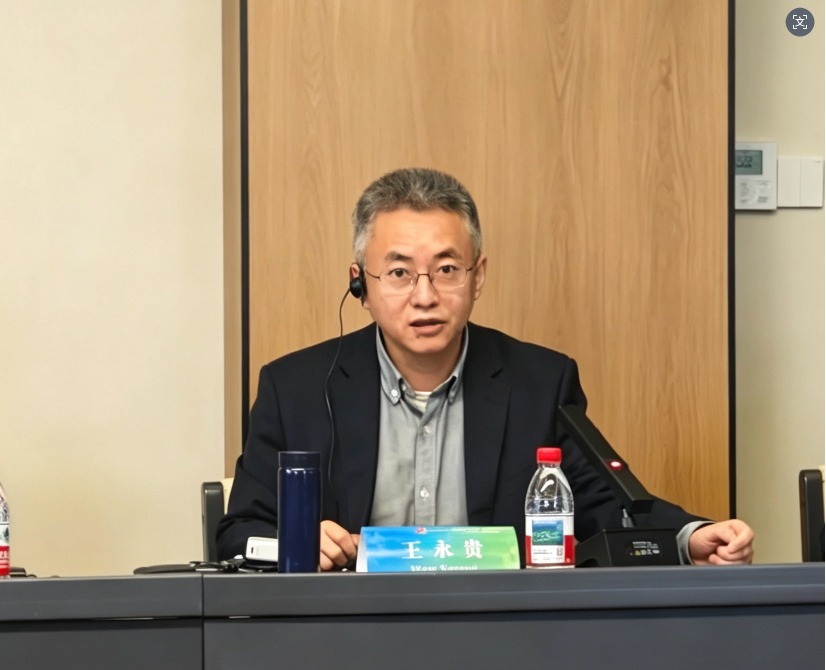
On the morning of November 17, the 2026 China (Zhejiang)–Brazil University Presidents' Dialogue was held in Hangzhou. President Wang Yonggui attended the dialogue and delivered a keynote sharing in the round table session themed "Mutual Learning Among Civilizations and University-Enterprise Collaborative Cultivation of Internationalized Talent." He engaged in in-depth exchanges with presidents of several Brazilian universities on topics including international exchange and cooperation, joint talent cultivation, disciplinary collaborative innovation, and mutual learning among civilizations, and introduced our university's distinctive features and proposals for cooperation with Brazil.
In order to further implement the consensus reached at the dialogue and deepen practical cooperation between universities in BRICS countries, MarÃlia Lima Pimentel Cotinguiba, Rector of the Federal University of Rondônia (UNIR), Brazil, and her delegation visited our university that afternoon. President Wang Yonggui and Vice President Gu Qing met with the delegation and jointly witnessed the signing of the inter-university Memorandum of Understanding on cooperation. Heads of International Office attended the meeting.
President Wang Yonggui welcomed Rector MarÃlia and her delegation, and gave an overview of the university's general situation and disciplinary strengths. He noted that Brazil is an important BRICS member country, and that the Federal University of Rondônia has built up profound expertise in Amazonian ecology, agricultural development, and humanities and social sciences research, while the two sides enjoy broad room for cooperation in such fields as food science, artificial intelligence, the environment, and linguistic and cultural exchange. He expressed the hope that the signing of the Memorandum of Understanding would serve as a new starting point for establishing a long-term inter-university cooperative relationship, carrying out orderly faculty and student exchanges, joint talent cultivation, collaborative scientific research, and practical cooperation at the university-enterprise level, and translating the consensus reached at the dialogue into tangible projects, so as to help BRICS countries share higher education resources and jointly cultivate talent, and to promote mutual learning and common development between Chinese and Brazilian higher education.
Rector MarÃlia expressed her gratitude for our university's warm reception and briefly introduced her university's development. Located at the intersection of the Amazon ecological zone and the development belt of Brazil's Midwest, the university offers programs at the bachelor's, master's and doctoral levels across such disciplines as ecology and biodiversity, agriculture, engineering, and humanities and social sciences, and is dedicated to talent cultivation and research services oriented toward the western Amazon. She greatly values this opportunity for cooperation and looks forward to establishing a regular counterpart cooperation mechanism with Zhejiang Gongshang University, deepening cooperation in such areas as language and culture, interdisciplinary research, and two-way faculty and student exchanges.
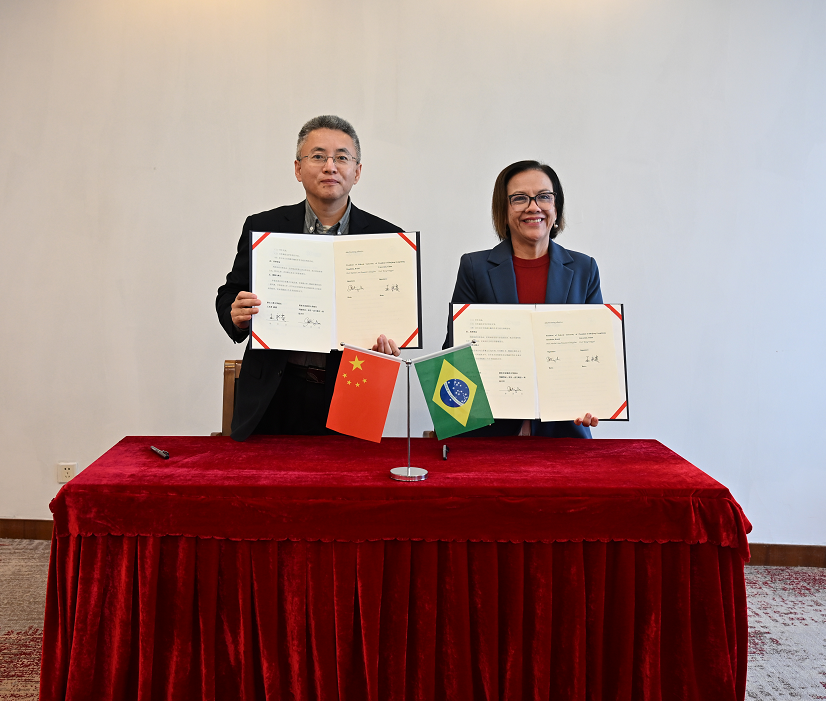
The two sides signed an inter-university Memorandum of Understanding, formally establishing an inter-university cooperative relationship. Following the signing ceremony, the delegation visited and exchanged views at the School of Foreign Languages and the University History Museum, and spoke highly of the university's achievements in running the institution.
The year 2026 marks the China-Brazil Year of Culture. The China (Zhejiang)–Brazil University Presidents' Dialogue has provided our university with a platform for dialogue and exchange with Brazilian higher education institutions. By establishing an inter-university cooperative relationship with the Federal University of Rondônia (UNIR), our university has broadened its channels for higher education exchange with Brazil. Both sides will work to put in place an exchange and cooperation mechanism and bring substantive cooperation projects to fruition, contributing the strength of higher education institutions to deepening educational and cultural exchanges among BRICS countries.
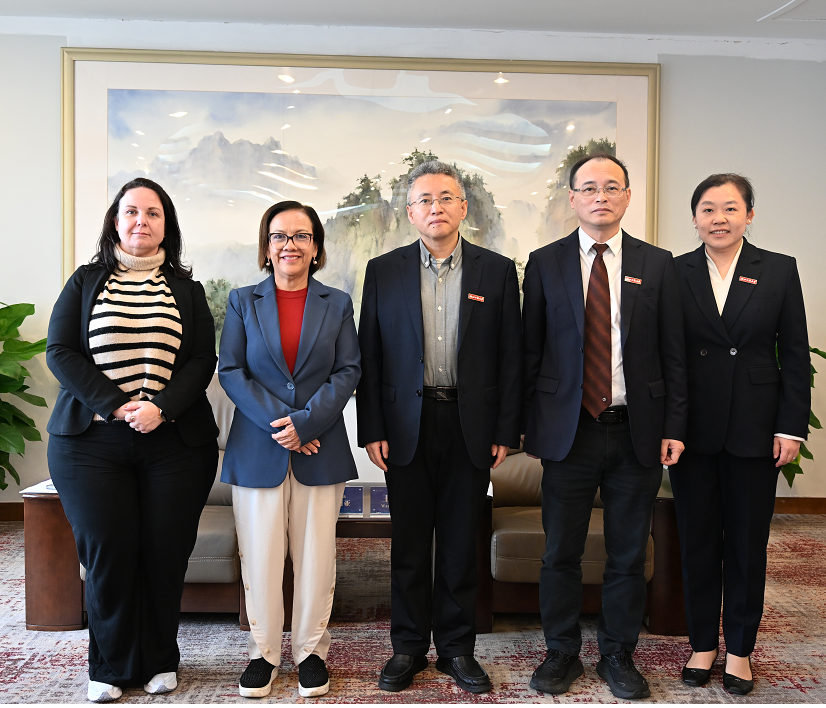
 University Leadership